A Nun’s Life

« Being Contemplative in a Hectic Life | Home | Back Home »

Thoughts on Habits

By Sister Julie | May 2, 2008

Sister Judy over at The Digital Nun has a 3-part series on habits

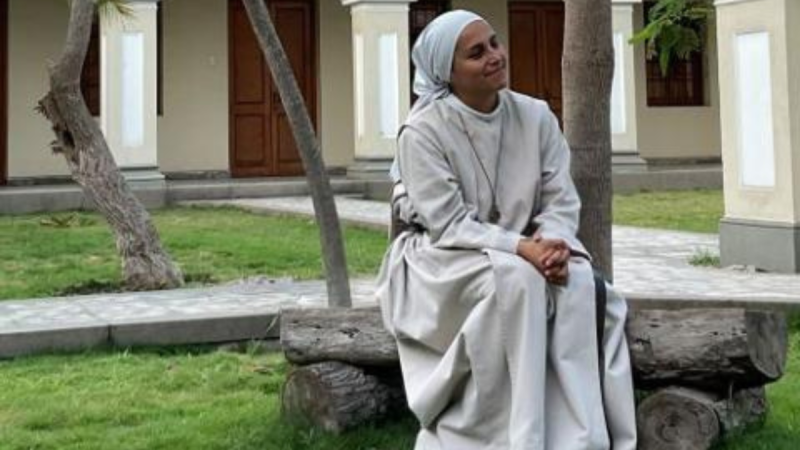
While the habit does not make the nun, it is a part of religious life. Unfortunately the habit is sometimes used by Catholics and the media as a gauge of faithfulness, catholicity, and/or relevancy. I can never understand why Catholics want to be so divisive within our own Church or why the media must pit groups against one another. Religious life is meant to be diverse, and this diversity is a gift to the Church and world. We need nuns in identifiable habits and nuns in habits that aren’t much different from the ordinary, modest dress of the people. We need nuns who are devoted to solitude and pray ceaselessly for the good of the Church and world. And we need nuns who are actively engaged in apostolates in every sphere of life. These ministries, these callings have been present in the church since its inception.

Well check out Sister Judy’s posts for more thoughts on habits.

click and share: These icons link to social bookmarking sites where readers can share and discover new web pages.
  • del.icio.us
  • TwitThis
  • Technorati
  • Google
  • Facebook
  • bodytext
  • Furl
  • Ma.gnolia
  • Reddit
  • StumbleUpon
  • N4G
  • NewsVine
  • YahooMyWeb
  • Print this article!

Topics: NUN 101, habit |

16 Responses to “Thoughts on Habits”

  1. asimplesinner Says:
    May 3rd, 2008 at 1:41 am

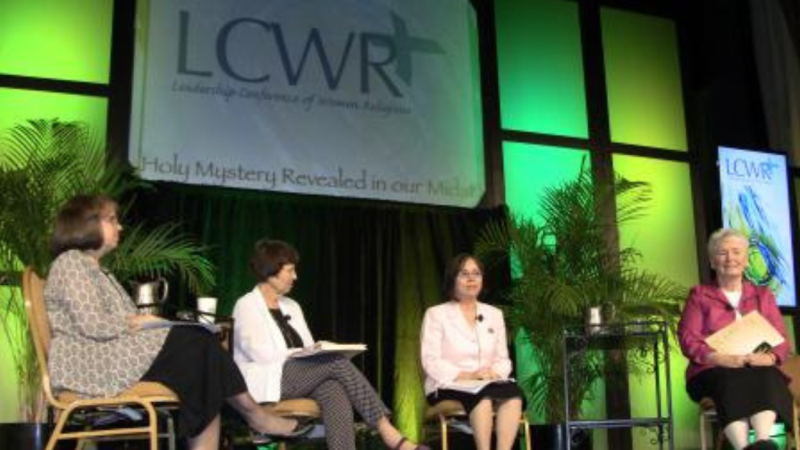
    Unfortunately it is not for nothing that some of us have taken the acceptance or rejection of the habit as a sign. It would be easy enough to say “ah the media”… But I have never seen a photograph of a religous sister in habit marching for abortion rights or protesting the pope. When you compare and contrast the photographs of the annual Leadership Council of Women Religous to the Council of Major Superiors of Women Religious… Night and day.

    The associations didn’t come out of nowhere - they were well cultivated.

  2. Sister Julie Says:
    May 3rd, 2008 at 6:58 am

    Thanks for writing, asimplesinner. I hope that your only experience of nuns isn’t just photographs. Photos are a very compelling form of media, but of course they don’t tell the whole story. A photograph, an article in the newspaper, a blogger’s post — each is just one perspective and often pales in comparison to engaging with the subject itself.

    I’d appreciate your insight into this, asimplesinner, because I want to understand this better. I’m particularly concerned about the idea that sisters in a non-recognizable habit are somehow less faithful to the Church and the pope. I’ve never known such sisters — and I’ve known plenty of sisters from many different congregations, ones belonging to both LCWR and CMSW.

  3. David Says:
    May 3rd, 2008 at 7:15 am

    When I first started working as a legal advocate for persons who were deaf, I worked with a PhD disabilities specialist named Rita. One day, after working with Rita for a few weeks, she left me a message to call her during the evening about a project upon which we were working. When I called the number, the person answered the phone “Sacred Heart Convent.” I apologized about dialing the wrong number and called again- only to get the convent again.

    The next day, Rita asked me why I had not called her. I told her that the number she left was wrong- it was to a convent. Her reply, of course, was “Well where do you think nuns live?” And so I learned that Rita was a nun who rarely wore her habit! More embarrassing, was my common jocular practice then, to respond to someone knocking on my office door with a “Come on in, we are dressed now!” How many times I said that when Rita was in my office!!

    Rita, who later took to wearing her order’s habit more regularly as her obligations within the order changed, is one of my most influential spiritual guides. She is one of the most amazing centered, competent, resourceful and caring persons on this planet. She is a profound blessing.

  4. asimplesinner Says:
    May 3rd, 2008 at 10:45 am

    ” I hope that your only experience of nuns isn’t just photographs.”

    No, through the course of Catholic schools, seminary, and working as a volunteer with a number of Catholic Charities I have had more experience with religous sisters that photographs. I used to attend a morning Mass at a cloistered convent which had a chapel space for non-members…

    “I’m particularly concerned about the idea that sisters in a non-recognizable habit are somehow less faithful to the Church and the pope. I’ve never known such sisters”

    Respectfully we may simply have to part ways on this one and I will be happy for you that you have known paragons of filial love, affection and obedience. I have been down this road of discussion before, and would rather sidestep the semantics of going through how both of us understand fidelity, where your criteria comes from where mine does, what formed our standards…

    I stumbled on to this post via Wordpress Tag Surfer… It was only after posting it that I put 2 + 2 together and realized that I had come to e-home of the sister I had read about in the Chicago Tribune’s “The blogging nun: Religion, technology and beer.” Maybe next time I am in Chicago we can meet up for a pint at Chicago Joe’s - I am more of a Guinness many myself.

    Best of luck.

  5. Samantha Says:
    May 3rd, 2008 at 9:31 pm

    I just finished reading Cheryl Reed’s qualitative study on nuns, and she mentions that the most divisive issue among nuns today is not birth control, the Pope, or doctrine, but the habit.

    When I was a little girl and up until my mid-teens, I really wanted to become a nun. And I thought habits were so cool, especially the modified ones, kind of like the one Sister Steve wore on the Father Dowling Mysteries (I watched a lot of tv growing up). I remember thinking that when I became a nun, I wanted to wear a habit. A lot of that feeling came from being a child though - from thinking that somehow what you wear makes a difference in what you are, which you learn is really not at all the case.

    I never did become a nun, and no longer consider myself Catholic. But despite that, despite those changes, I fee like I’m very much the same person, that same person who wanted to become a nun. So although I know I’ll never join the convent, I like to think that I’ve kept some “nuniness” with me. Which makes sense, because I’m still the same person, I have the same personality, and I still cry when I watch “Brides of Christ.” (best miniseries ever, by the way).

    Speaking of “Brides of Christ”, I always related to Catherine the most. She joined the convent and really wanted to be a nun - but she was stubborn and outspoken, and as time went by she realized her views seriously clashed with Church law. After about six years as a teaching Sister, she ends up leaving the convent, knowing that as much as she may have dreamt about being a nun, she couldn’t deal with the contradictions or the conservatism of the Church - which I know I couldn’t, either, being as liberal as I am. She ends up writing a book about her life in the convent, and as she speaks in front of an audience she tears up, talking about how although she knew she had to leave, she had “few words to describe the grief.” But she finishes with the thought that “you can peel the layers off an onion, but what you get is a smaller, shinier onion. So here I am today, a smaller shinier onion, but still an onion.” I find that to be a beautiful analogy, and a very true one.

    I understand that the habit is appealing, brings up feelings of nostalgia and of romanticism, and I admit still watch the Father Dowling Mysteries so I can see Sr. Steve play pool in her beautiful habit. I know some people see the habit as a symbol of a simpler time, but the reality is that it never was a simpler time. I love going down memory lane as much as the next person, but I think a lot of people are remembering it the way it never was. I think so much of nostalgia comes from just knowing that time is fleeting, that our life on Earth is limited, and that people die. That alone can make people resistant to change. But I really don’t believe that the world is all that different than it used to be - people still laugh, cry, and need pretty much the same things. And whether nuns wear a habit or not really isn’t important, because in the end, when you peel the layers off an onion, you’ve got a smaller, shinier onion. And thank goodness for that!

  6. asimplesinner Says:
    May 3rd, 2008 at 11:06 pm

    ” lot of that feeling came from being a child though - from thinking that somehow what you wear makes a difference in what you are, which you learn is really not at all the case.”

    I hope that this isn’t an implicit reduction of the habit to being a sort of “childish” thing… Or an intimation that the fine, fine women who still wear them and see the habit - a sure sign of contradiction to the wisdom of the world - as perhaps not being sophisticated enough to understand that “its whats on the inside that counts”. It isn’t that they have identity in the clothing or the uniform - those things can and do change. It is that the habit is a reflection to the world of their commitment and an aid in detachment from vanity, greed, and the ways of the world. It is a part of the spirituality, not a source of it.

    It isn’t a misplaced sense of nostalgia or romanticism on the part of those who are pro-habit.

  7. Samantha Says:
    May 4th, 2008 at 4:52 am

    Oh no, that’s not what I meant at all! It’s judging those who don’t wear habits that I think is childish, not actually choosing to wear them. Habit wearing nuns rock too :D
    I guess part of me also feels that the “outside world” isn’t all that selfish - I mean okay, sometimes it is, but…I guess I never really saw nuns as contradicting the ways of the world, but more like being another facet of the ways of the world. A good facet :D

  8. David Says:
    May 4th, 2008 at 5:24 am

    As a community, it may be true that orders that normatively wear a habit might tend to be more “theologically traditional,” but within such orders one might well find some of the least “theologically traditional” of nuns. Similarly, some of the sisters who are not wearing habits, are among the most “theologically traditional” (except, perhaps, on the issue of dress).

    Sisters are as diverse as the rest of the human family. They are united by a faith in Catholicism and a willingness to serve their faith and God, as they individually understand them.

    Undoubtedly, some sisters find the habit conducive to their spirituality. Some might well find it a hindrance to their spirituality or service to others.

    Defining people by their clothing (or any other narrow criterion) is a sure way to limit our ability to appreciate the plethora of traits and thoughts that are inherent in every human.

  9. fr. martin farrell, op Says:
    May 5th, 2008 at 8:22 am

    I’d like to share a couple of quotes which, I think, are pertinent and also able to develop this topic fruitfully:

    “A religious can’t say ‘I love my vows’ as though they were simply a private devotion between themselves and the Lord. The community is the arena of profession and vows imply ‘belonging’ as well as consecration. Likewise, if the habit becomes an individual question of personal integrity, it loses the significance of denoting community membership. The religious habit is a COMMUNITY questin and not a personal question.” J. McCambridge, o.p.

    “The point of the babit…is that it transforms the spiritual, courageous and holy significance of the work of the individual sister from attributes of her character that point back to her individual goodness, into what has been called ‘an eschatological sign of the Kingdom’ that represents all of her Sisterhood and is a witness within the Universal Church.” J. McCambridge, o.p.

  10. Cathy Keller Says:
    May 5th, 2008 at 5:47 pm

    I wonder if the soul inside can tell the difference. This is probably too simplistic, but with or without the habit it is the soul of the one serving that is most important in my estimation. The life of the soul is what will be judged in the end not if a habit was warn or not. Sisters/nuns I have known, with and without the habit, have been who the are because of the soul within not the dressing without. Life is too short and there are so many tasks we must all perform in caring for each other that a debate over the habit is a little dismaying. There are poor, sick, and hungry who don’t care what any of us wear if we would just care. I pray that God will bless us all in our endeavors to care for each other despite how we are clad.

  11. asimplesinner Says:
    May 5th, 2008 at 9:52 pm

    “I wonder if the soul inside can tell the difference. “

    ???

    You speak of the soul like it is a pet. What you are aware of, you are aware of as a soul in a body.

  12. Cathy Keller Says:
    May 6th, 2008 at 4:31 am

    No, my soul is not a pet, and perhaps that first sentence of mine did not make that very clear. It was pretty vague. What I had hoped to make clear was that in order for us to live the life we are called to, the soul within all of us needs nurturing. The externals don’t seem quite as important if we are tending to the gifts of the soul that allow us to grow and cherish the love of God and thereby wish to nurture and care for others. I agree with David when he said, “Defining people by their clothing (or any other narrow criterion) is a sure way to limit our ability to appreciate the plethora of traits and thoughts that are inherent in every human.”

  13. fr. martin farrell, op Says:
    May 6th, 2008 at 9:52 am

    Cathy Keller,

    Our traditional Catholic belief is that the spritual part of our life is VERY closely bound up with the external. That’s why the Sacraments are so important–they aren’t just Spiritual, but very physical–water, food, oil, touch, etc. etc. The habit is a sacramental, and so, like all other sacramentals, it has the ability to dispose one to a more fruitful reception of sanctifying grace.

    Gnosticism, on the other hand (which is VERY prevalent today, both within and without the Church), would suggest that the physical is only incidental to our spiritual health. This is an EXTREMELY dangerous position, which is why it has been consistently condemned by the Church since its earliest days.

    David’s suggestion that the habit is a way of defining people is a very one-dimensional view which really fails to understand and appreciate the dynamic value which religious have place on religious garb since the earliest days of monastic life in the desert.

  14. David Says:
    May 6th, 2008 at 11:51 am

    I think Father Farrell misreads me. I certainly did not suggest that “the habit is a way of defining people.” Au contraire. I also did not argue that sisters should be free to choose not to wear a habit, if it is their community’s committed practice to wear one. What I stated was that one should be prudent about defining people based on their garb. Many normative religions appreciate that one’s spiritual life is not divorced from the external, and the sacredness of certain clothing is reflected in the Abrahamic religions of head coverings, tzitis, and the like. It is also reflected in many Eastern religions. My initial post was a response to the suggestion that simply knowing that a sister belonged to an order that did not mandate habits, meant that the sister’s position on other matters of faith was somehow disclosed. Blessings to all.

  15. Sister Judy Says:
    May 7th, 2008 at 10:08 am

    Hello to all, and I would very much like to thank you Sr.Julie for referring to my posts on The Digital Nun about the issue of the habit.
    I have to say that your single mentiono of my blog cause visits to my site to increase substantially. You really have quite an extensive readership and I think that is great.
    It interests me that there is so much of a response to the question of habits both on my blog and on this one.
    I agree with David when he says:

    “Defining people by their clothing (or any other narrow criterion) is a sure way to limit our ability to appreciate the plethora of traits and thoughts that are inherent in every human.”

    I also agree with Cathy’s statement:
    “There are poor, sick, and hungry who don’t care what any of us wear if we would just care. I pray that God will bless us all in our endeavors to care for each other despite how we are clad.”

    But then you can’t ignore Father Ferrell’s assertion that externals are a part of our faith and do have some “ability to dispose one to a more fruitful reception of sanctifying grace.”

    I think that when we are literally outfitted in a symbol of our identity and commitment, it helps us to kind of live them better.

    I guess my view is that this is no easy question. I don’t think it is a worthless discussion, because what we wear does matter, but I don’t think habits are at the core of our commitment as religious. I think that if I am dismayed at all when it comes to this question, it is how often I hear people wanting to place habits is such an all-important position.

    Anyway…thanks again Sr. Julie. Peace to you all,
    Sr. Judy

  16. David Says:
    May 7th, 2008 at 4:57 pm

    I don’t think that the real issue is garb- but commitment to one’s community and the duty of persons consecrated in the church to provide a sign of their commitment.

    Pope John Paul II spoke on this issue, among others, in his Vita Consecrata of 1996.

    The part that addresses religious dress of consecrated persons is in paragraph 25. The pertinent section, unedited, in its entirety, is:

    The first missionary duty of consecrated persons is to themselves, and they fulfil it by opening their hearts to the promptings of the Spirit of Christ. Their witness helps the whole Church to remember that the most important thing is to serve God freely, through Christ’s grace which is communicated to believers through the gift of the Spirit. Thus they proclaim to the world the peace which comes from the Father, the dedication witnessed to by the Son, and the joy which is the fruit of the Holy Spirit.Consecrated persons will be missionaries above all by continually deepening their awareness of having been called and chosen by God, to whom they must therefore direct and offer everything that they are and have, freeing themselves from the obstacles which could hinder the totality of their response. In this way they will become true signs of Christ in the world. Their lifestyle too must clearly show the ideal which they profess, and thus present itself as a living sign of God and as an eloquent, albeit often silent, proclamation of the Gospel.The Church must always seek to make her presence visible in everyday life, especially in contemporary culture, which is often very secularized and yet sensitive to the language of signs. In this regard the Church has a right to expect a significant contribution from consecrated persons, called as they are in every situation to bear clear witness that they belong to Christ.Since the habit is a sign of consecration, poverty and membership in a particular Religious family, I join the Fathers of the Synod in strongly recommending to men and women religious that they wear their proper habit, suitably adapted to the conditions of time and place.Where valid reasons of their apostolate call for it, Religious, in conformity with the norms of their Institute, may also dress in a simple and modest manner, with an appropriate symbol, in such a way that their consecration is recognizable.Institutes which from their origin or by provision of their Constitutions do not have a specific habit should ensure that the dress of their members corresponds in dignity and simplicity to the nature of their vocation.

    I suggest that the Holy Father has provided for flexibility on the issue of habits within the traditions of the particular order.

    Further, in the hope that this brings some peace to the issue, I note Pope John Paul II’s exhortation about relationships between the different religious orders:

    Communion among different Institutes
    52. Fraternal spiritual relations and mutual cooperation among different Institutes of Consecrated Life and Societies of Apostolic Life are sustained and nourished by the sense of ecclesial communion. Those who are united by a common commitment to the following of Christ and are inspired by the same Spirit cannot fail to manifest visibly, as branches of the one Vine, the fullness of the Gospel of love. Mindful of the spiritual friendship which often united founders and foundresses during their lives, consecrated persons, while remaining faithful to the character of their own Institute, are called to practise a fraternity which is exemplary and which will serve to encourage the other members of the Church in the daily task of bearing witness to the Gospel.

    Saint Bernard’s words about the various Religious Orders remain ever timely: “I admire them all. I belong to one of them by observance, but to all of them by charity. We all need one another: the spiritual good which I do not own and possess, I receive from others … In this exile, the Church is still on pilgrimage and is, in a certain sense, plural: she is a single plurality and a plural unity. All our diversities, which make manifest the richness of God’s gifts, will continue to exist in the one house of the Father, which has many rooms. Now there is a division of graces; then there will be distinctions of glory. Unity, both here and there, consists in one and the same charity”.

    Peace to all.
    David

Comments