

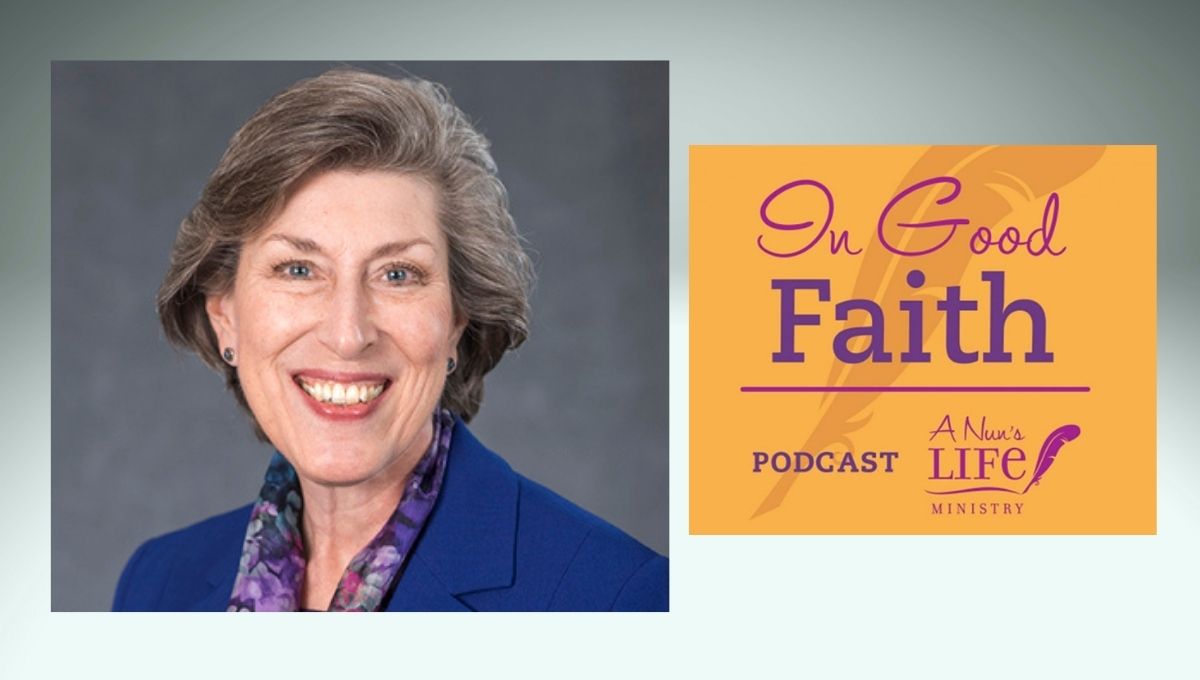
Congratulations to Sister Barbara Reid, OP, on her election as President of Catholic Theological Union on November 15, 2020! We were honored to have a podcast with her in 2011.
IGF010 In Good Faith with Sister Barbara Reid, OP, PhD, recorded live on June 2, 2011. Produced by aNunsLife.org ministry. The nuns talk with Sister Barbara about finding God in everyday life, Sacred Scripture, prayer, biblical spirituality, and more!
 RSS Subscribe



- The Bible as a way to understand our present experience of God in light of the experience of our ancestors in the faith.
- New to the Bible? Suggestions for how to get started.
- Conflicting images of God in the scriptures – who is the “real” God?
- Jesus, the incarnation of the loving God.
- Biblical spirituality.
- Ways to pray with the Bible.
- Saint Dominic’s Nine Ways of Prayer.
- Women in the scriptures and their messages for us today.
- ”Feminism” – a commitment to dignity and equality for all people.
- How the feminist perspective challenges interpretations of scripture that justify violence and abuse.
- How to keep the scriptures “fresh."
 Sister Barbara Reid, OP, is a Dominican Sister of Grand Rapids, Michigan. She holds a PhD in Biblical Studies from The Catholic University of America in Washington, DC and is professor of New Testament and vice president and academic dean at Catholic Theological Union in Chicago. Her most recent books are Taking Up the Cross: New Testament Interpretations Through Latina and Feminist Eyes, The Gospel According to Matthew: New Collegeville Bible Commentary Series, the three-volume work Parables for Preachers, and Choosing the Better Part? Women in the Gospel of Luke.